Compatibility review
Confirm board finish and component terminations match lead-free reflow.
XFPCB assembles boards with lead-free solder processes suited to RoHS-oriented products. We align PCB surface finish, component termination and reflow profiles so joints meet the higher temperature window of SAC alloys.
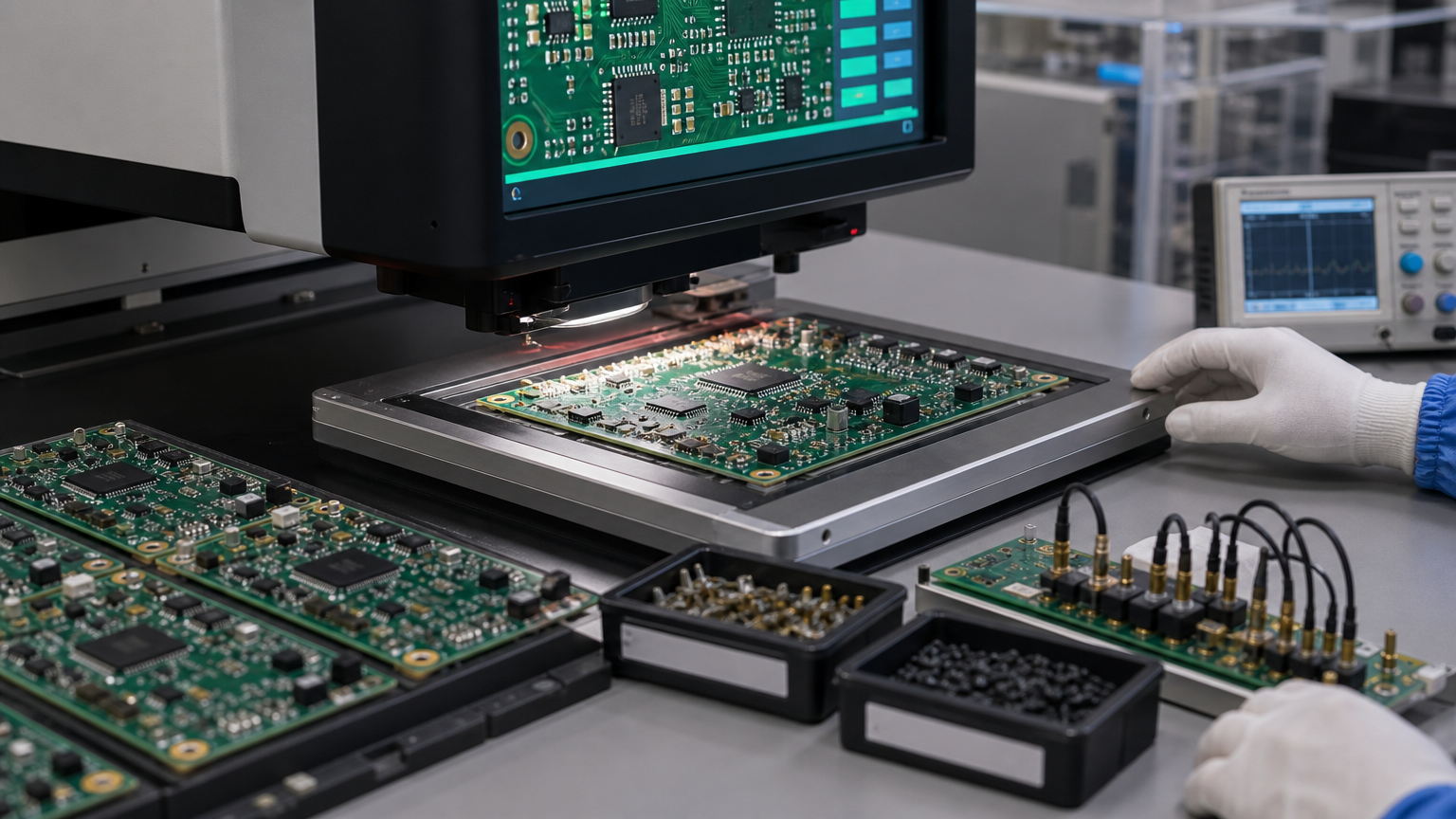
Lead-free assembly is not only a solder spool change. Finish (ENIG, lead-free HASL, OSP), component termination metallurgy and moisture control all affect wetting and reliability.
Tell us if any parts are exempt or intentionally tin-lead; mixing chemistries without a plan creates weak joints.
Confirm board finish and component terminations match lead-free reflow.
Set SAC-appropriate soak/peak while respecting component max ratings.
Bake or monitor floor life for moisture-sensitive packages when data is provided.
AOI for visible joints; X-ray for BGA/QFN as required.
| Project Area | XFPCB Guidance |
|---|---|
| Solder | Lead-free SAC family for SMT reflow |
| Finishes commonly paired | ENIG, lead-free HASL, OSP, immersion silver |
| Risk items | MSL parts, large BGAs, mixed metallurgy BOMs |
| Customer input | RoHS status per line and any exemptions |
We verify the bare-board finish is suitable for the lead-free profile you expect.
Components with low peak ratings are flagged before reflow programming.
MSL parts get baking/floor-life handling when you provide MSL levels.
Lead-free is our standard direction for RoHS-oriented builds. If you need a special process, state it explicitly on the RFQ.
ENIG is common for fine-pitch; lead-free HASL and OSP are also used. Finish choice should match shelf life and assembly schedule.
Only with a clear plan. Identify exempt lines and whether tin-lead process is truly required.
We can support documentation based on supplier data for parts we purchase; share your required format early.
Note RoHS expectations, board finish and any temperature-limited components on your RFQ.