Board & LED review
Confirm substrate (Al MCPCB vs FR-4), LED package type and any silicone lens constraints.
LED modules fail when polarity is reversed, thermal pads are starved of solder, or MCPCB heat paths are ignored. XFPCB assembles LED PCBs with placement rules and reflow plans tuned for arrays and power LEDs.

LED boards often use aluminum metal-core PCBs, tight polarity marks and large thermal pads under high-power packages. Paste volume and reflow must wet the thermal pad without tombstoning small nearby parts.
Share LED binning or Vf grouping needs if you require matched strings - those rules belong in the traveler.
Confirm substrate (Al MCPCB vs FR-4), LED package type and any silicone lens constraints.
Design apertures so thermal pads get enough paste without bridging.
LED cathode/anode marks verified against CPL before the full array runs.
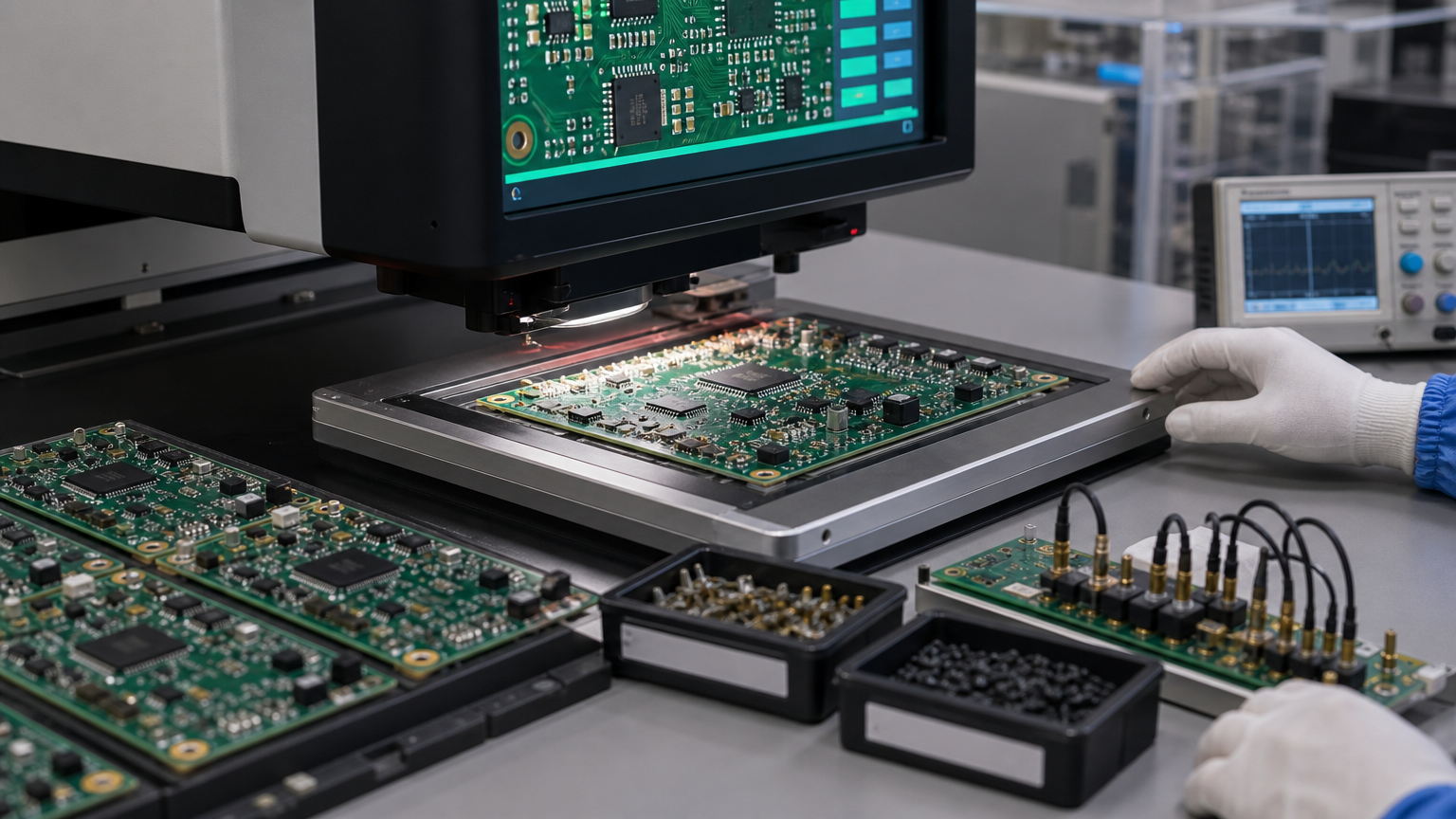
Profile for MCPCB thermal mass; inspect polarity, tombstones and solder on thermal pads.
| Project Area | XFPCB Guidance |
|---|---|
| Substrates | Aluminum MCPCB, copper-base, or FR-4 LED boards |
| Critical SMT risk | Thermal pad voiding / polarity reverse |
| Often paired with | LED PCB fabrication and stencil service |
| Optional test | Simple power-on or string continuity if specified |
Paste windows are sized so heat-slug pads wet without starving or bridging.
Silkscreen and CPL must agree; we stop on mismatch rather than guess.
Aluminum boards get a profile that accounts for higher thermal mass.
Yes. MCPCB assembly is common for lighting. Share board thickness and LED datasheets so reflow and handling are set correctly.
Polarity marks on silkscreen plus CPL verification and AOI/visual checks on the array.
If you require binning, state the rule and supply pre-binned parts or clear purchasing specs.
Gerbers, BOM with LED MPNs, CPL, and notes on thermal pad paste or test requirements.
Tell us substrate type, LED package and any binning or power-on test needs.