Scope the lot
Confirm quantity, revision and which parts are consigned.

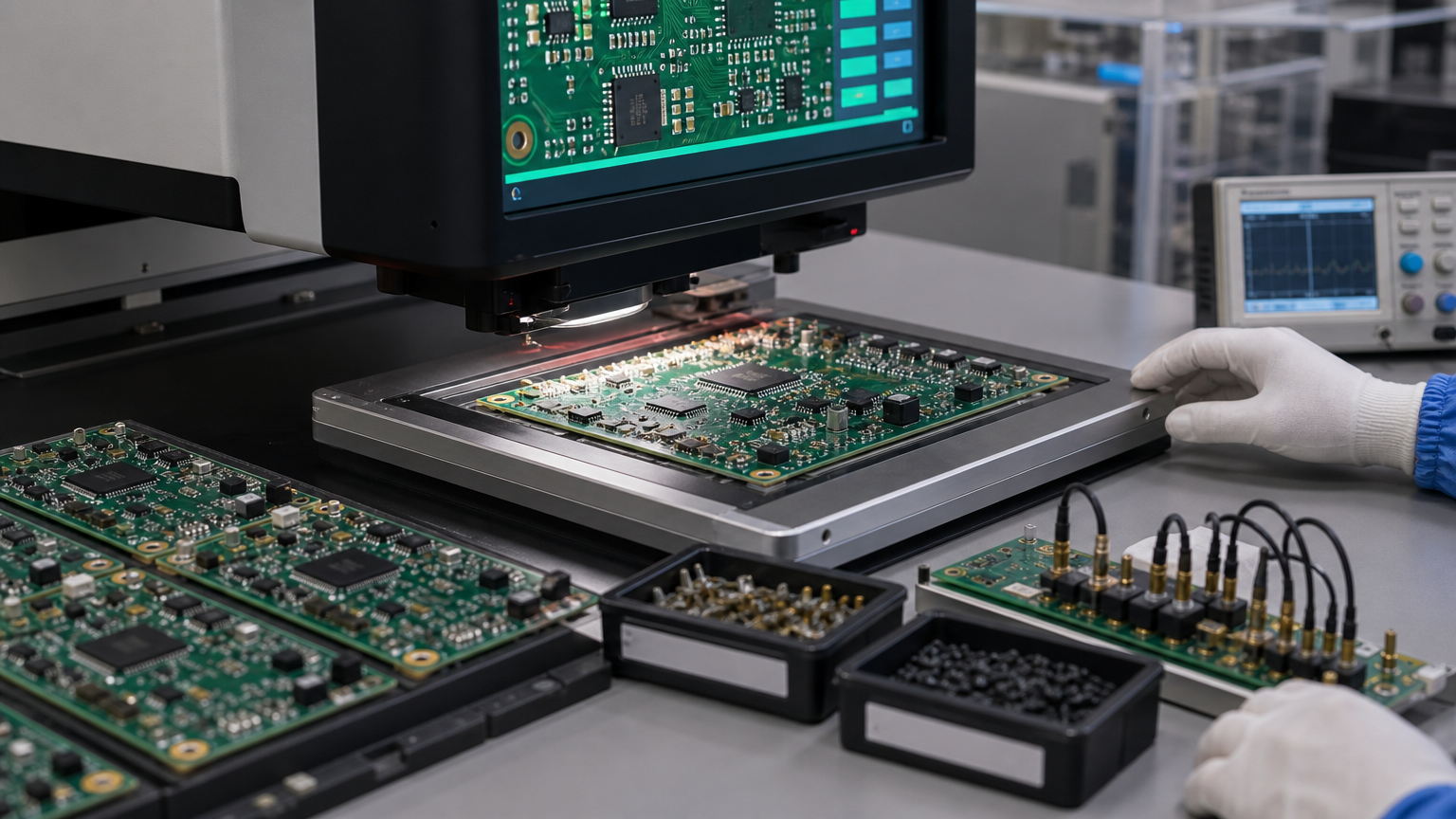
Low-volume assembly fits pilot production, spare modules and specialty instruments where quantities are modest but workmanship still needs SMT process control and documented revisions.

Small lots still need correct polarity, paste design and inspection. XFPCB runs low-volume PCBA on the same fundamental process as larger jobs, with more flexibility on odd-form parts and consigned kits.
This service sits between prototype bring-up and high-volume release - ideal when the design is mostly stable but annual quantity stays limited.
Confirm quantity, revision and which parts are consigned.
Catch pad/aperture and polarity issues that would scrap a whole small lot.
SMT/THT with attention to hand-place steps common in specialty products.
AOI/visual as agreed; label revision clearly for field spares.
| Project Area | XFPCB Guidance |
|---|---|
| Typical qty | Small lots and recurring pilots |
| Good for | Industrial instruments, spares, bridge builds |
| Watch-outs | High setup cost vs unit cost - batch when possible |
| Upgrade path | Move to volume service when forecast stabilizes |
Combining nearby releases can reduce setup cost without jumping to mass production.
Photos and height drawings prevent mis-build on connectors and transformers.
Tell us if boards are field spares so labeling options stay consistent.
Not always. Prototypes tolerate changing files; low-volume assumes a mostly stable revision with modest quantity.
Yes. We keep the process package for that revision so recurring spares stay consistent.
Clean files, batched releases and consigned hard-to-buy ICs reduce purchasing overhead and setup churn.
Discuss coating or other extras at quote time so they are scheduled with the lot.
Tell us lot size, whether this is a pilot or recurring spare, and how parts will be supplied.