
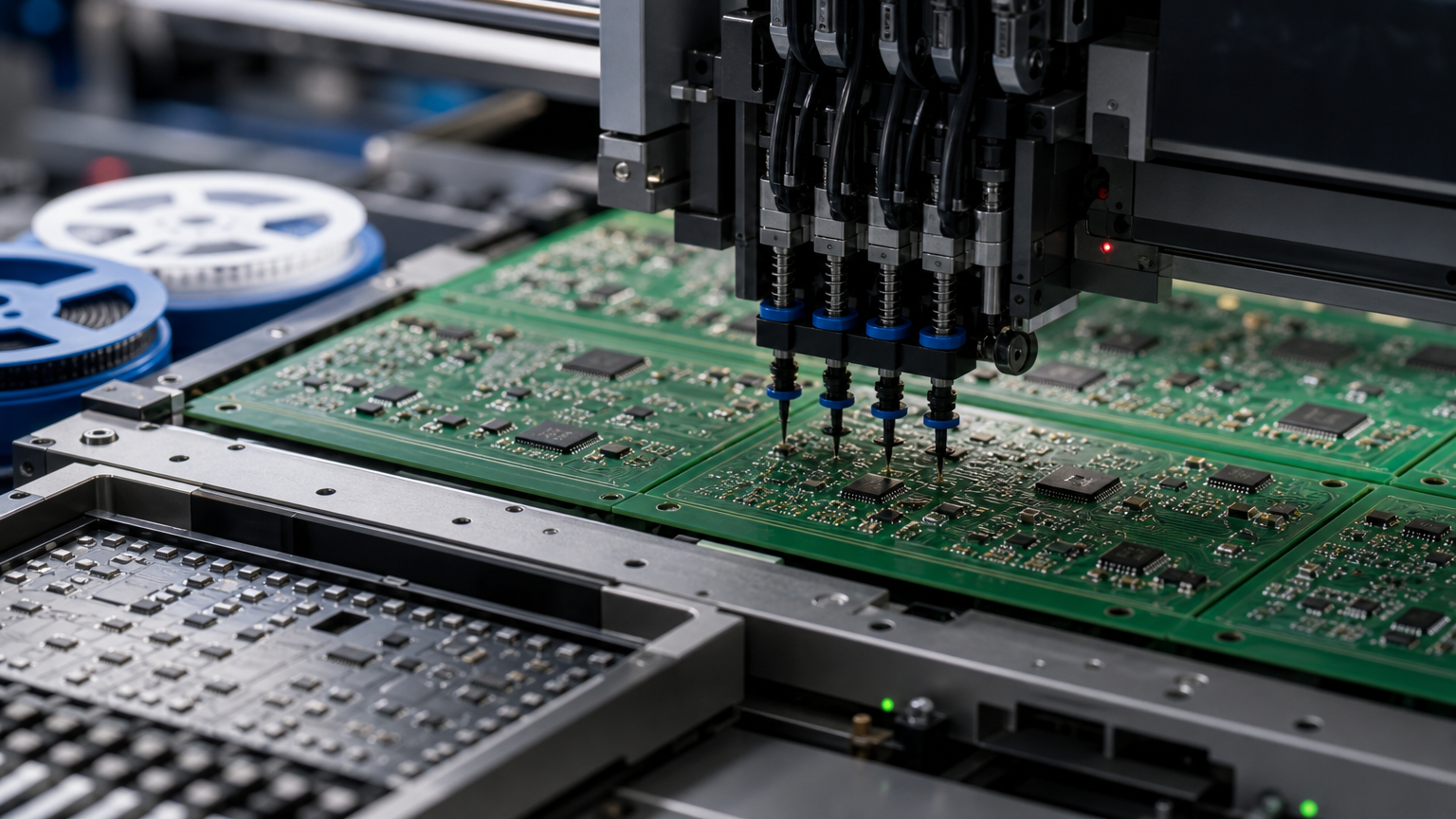
Walk any PCBA line long enough and you stop thinking of SMT as a single machine. It is a chain of handoffs: kit integrity, paste geometry, placement accuracy, metallurgy in reflow, and inspection coverage that matches the packages on the board. Skip an undocumented gate and the failure looks random weeks later in the field.
For overseas buyers comparing China quotes, the practical question is not "do you do SMT?" It is which process gates are included, which are optional, and how mixed through-hole work fits after surface-mount.
Before the line starts: board and kit readiness
SMT begins earlier than the printer. PCB quality, land patterns, fiducials, and finish all constrain paste release and placement. On the materials side, the BOM must resolve to real MPNs, packages, and polarity rules. Date codes, MSL bake status, and consigned packing lists that match the assembly revision are kit problems, not placer problems, but they scrap like placer problems.
If one reel is wrong or damp, the entire schedule slips. That is why serious NPI reviews treat incoming QA as part of the process flow, not as warehouse paperwork.
Solder paste printing
Paste printing puts solder volume where the pads need it. The board is fixed, paste is forced through a stencil, and aperture design plus board support dominate early yield on fine-pitch products. Stencil thickness, aperture reduction, and via treatment under BTC center pads matter as much as the printer brand.
Many "mystery" SMT defects start here as bridges, insufficients, or skewed deposits that only become visible after reflow.
Optional but high-leverage: SPI
Solder paste inspection measures volume, height, and alignment before parts land. It is especially valuable for fine-pitch QFN, BGA, and volume programs where paste defects drive most early fails. SPI without response rules is theater: define what happens when volume is out of window, and feed repeating signatures back into stencil DFM.
Prototype jobs sometimes waive SPI after the window is proven. Waive it deliberately, not by silence in the RFQ.
Placement and reflow
Pick-and-place pulls parts from feeders and sets them on paste. Machine capability matters, but data quality matters more on NPI: CPL rotations, polarity marks, and usable fiducials after finish and mask. Odd-form and hand-place parts need clear instructions in the same revision package.
Reflow melts the paste and forms the joints. Peak temperature, soak, and cooling must respect the board's thermal mass and the most delicate packages on it. A generic lead-free myth curve is not a profile for your assembly. Store profiles by revision; copper pours or large connectors added in an ECO can invalidate an old recipe. Nitrogen is process insurance for some packages; declare when it is required.
Inspection, cleaning, and test
After reflow, quality work splits by defect class. Visual or AOI catches missing parts, polarity errors, bridges, and many visible joint issues. X-ray covers hidden joints under BGA, CSP, and many QFNs. Electrical and functional tests catch what optics cannot.
Cleaning removes flux residues when ionic cleanliness or conformal coating prep requires it. Not every no-clean process needs a wash step; specify the cleanliness target rather than assuming a default.
Through-hole or selective soldering, if present, usually follows SMT. Press-fit connectors may skip solder entirely. Align the method early so hole-fill expectations match the process.
Final inspection and packing close the loop: MSD-aware packing for moisture-sensitive devices, correct labeling, and a quality plan that matches what was quoted.
Putting the flow into an RFQ
A robust SMT description for overseas procurement usually names: incoming/kitting rules, print and stencil ownership, SPI yes/no, placement data requirements, reflow assumptions, AOI and X-ray scope by package, THT method, and test coverage. That is how you compare SMT PCB assembly quotes on equal terms instead of equal buzzwords.
If you already know the risk packages on the BOM, say so. Fine-pitch area-array parts change inspection and paste strategy more than any marketing claim about line speed.